Wax & paraffin
Where deposition starts
Wax appearance temperature, pour point and cold‑finger style deposition behaviour, then inhibitor and PPD evaluation against the same baseline so the improvement is a number rather than an impression.
Laboratory & analytical services · Doc NX‑LB‑003 rev 04
Our laboratory work sits underneath everything else we do. It is how a chemical is chosen rather than guessed at, how a supplied product is verified before it reaches your tanks, and how a treatment programme is proved on your own fluids — not on a fluid that resembles yours.
A test that does not change a decision is a cost. Before we run anything we agree what question the result has to answer — then we choose the procedure that answers it.
| Determination | Question it answers | Reported as |
|---|---|---|
| Water & sediment in crude | Is the crude on‑spec for custody transfer, and is the separation train doing its job? | % v/v |
| Density & API gravity | What stream is this, and how should it be valued and blended? | kg/m³ · °API |
| Basic sediment (BS&W) | How much of the delivered volume is not crude? | % v/v |
| Pour point & cloud point | At what temperature does this stream stop flowing on its own? | °C |
| Wax appearance temperature | Where in the line will wax start to deposit? | °C |
| Viscosity profile | Can the pumps move this fluid across the expected temperature range? | cP |
| Sulphur content | What are the corrosion and processing implications downstream? | % wt |
| Salt content & chlorides | What is the corrosion load reaching the plant? | mg/L |
| Emulsion resolution (bottle test) | Which demulsifier breaks this emulsion, at what dose, in what time? | % · ppm · min |
| Chemical compatibility & stability | Will these products co‑exist in one injection system without dropping out? | Pass / fail |
Determinations follow recognised industry test practices. Exact method references and reporting limits are stated on each certificate and in Nexora’s issued scope of testing.
Screening starts with a representative live sample and a candidate set drawn from our own range and from qualified manufacturers. Each candidate is dosed across a ladder, held at process temperature, and read against the clock — water drop, interface quality, residual water in the oil phase, and the oil carried over into the water.
What comes out is not a favourite. It is a ranked table with the dose that achieved the result, the temperature it needed, and the ones that failed — because knowing what does not work on your fluid is worth as much as knowing what does. Where a candidate wins narrowly, we say so, and we take both to trial.
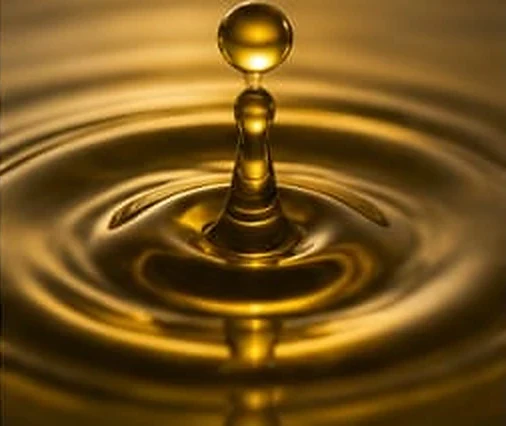
Plate 08 Dosing a candidate across the screening ladder
Flow assurance and integrity studies are run for the same reason: to move the problem from the field, where it is expensive, to the bench, where it is cheap.
Wax & paraffin
Wax appearance temperature, pour point and cold‑finger style deposition behaviour, then inhibitor and PPD evaluation against the same baseline so the improvement is a number rather than an impression.
Corrosion
Coupon and electrochemical style studies under representative fluid, temperature and gas conditions, with inhibitor screening reported as a rate and an inhibition efficiency, not a claim.
Scale
Water chemistry, mixing and saturation assessment, plus inhibitor efficiency and minimum effective concentration for the scaling tendency your own waters actually produce.
Compatibility
Chemicals that each work alone can precipitate together, or with the formation water. Compatibility and thermal stability testing is run before anything is committed to an injection system.
Water
Produced, industrial and waste water analysis — ions, hardness, alkalinity, solids, oil in water, iron and bacterial indicators — supporting both treatment design and environmental reporting.
Performance
Chemical performance testing repeated against the original baseline, so a programme that has quietly drifted is caught by data rather than by an incident.

Plate 09 Deposit examination during a wax study
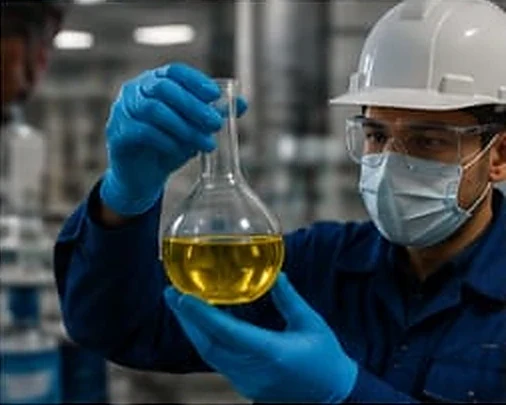
Plate 10 Baseline set retained for comparison against the treated series
Our field services exist to close that gap. The sequence below is ordered because it is a chain of custody — each step depends on the integrity of the one before it.
Samples are taken at agreed points under a defined procedure, labelled and logged on collection. A result can never be better than the sample it came from, so custody starts at the tap, not at the laboratory door.
We fix the baseline, the success criteria, the sampling frequency and the duration in writing before anything is injected. A trial without an agreed pass mark cannot be failed — which is exactly why it is worth nothing.
Injection support, rate verification and chemical injection monitoring run alongside production surveillance, so the response is read against what was actually dosed rather than what was intended.
Field data collection, site inspection and technical assessment are compiled as they happen, not reconstructed afterwards. Deviations are recorded with the reason, because the exceptions are usually the useful part.
The trial is closed out against the criteria set at step 02 — result, dose, cost per barrel treated, and a recommendation to adopt, adjust or stop. If it did not work, the report says so and explains what we would change.
Procurement without verification is just forwarding. Products we supply are checked against their specification before release, and the certificate travels with the batch — so the receiving end can audit us rather than trust us.
Where a product is sourced on a client’s behalf, we tell you what was tested, what was accepted on the manufacturer’s certificate, and where the two differ. Substitutions are raised before delivery, never explained afterwards.

Next step
Tell us the stream, the conditions and the decision the result has to support. We will confirm what we would test, what it will tell you, and how long it takes — before you commit to anything.
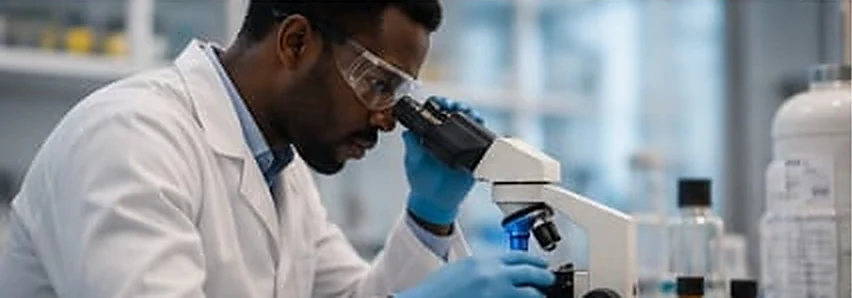
Plate 11 Analytical bench, sample intake through to reporting